Based in Irvine, California - Relocating to NYC
3+ years taking a Class II medical device from prototype to market viable product through FDA 510(k) submission and preparation for commercial launch at a Y Combinator startup.
I am an R&D Engineer at Vena Vitals, a Y Combinator-backed startup developing a wearable, non-invasive continuous blood pressure monitor. The initial device launch targets critical care settings where arterial lines, the current gold standard for continuous blood pressure, are invasive, costly, and complex to set up. The Vena Vitals wearable offers advantages in patient safety, procedural cost, and ease of setup, with a longer-term vision to improve accessibility to continuous blood pressure for use in settings such as sleep clinics and home monitoring.
For 3+ years I have worked across nearly every stage of the medical device development lifecycle, from early prototyping all the way through FDA 510(k) submission and preparation for commercial launch of a Class II wearable device. My hands-on work spans rapid prototyping, mechanical design, sensor fabrication process R&D, FDA 510(k) submission, clinical testing site management, QMS development, and test method validation.
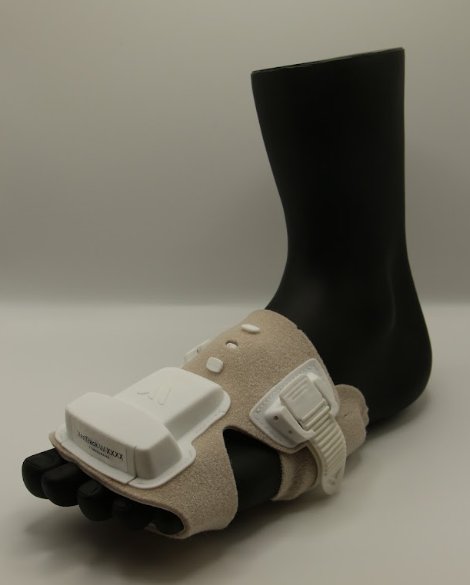
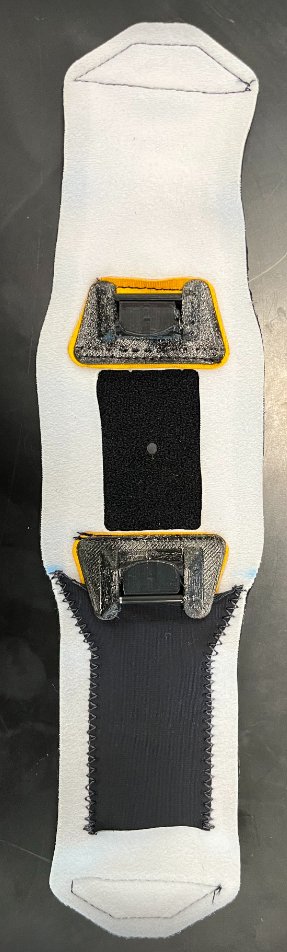
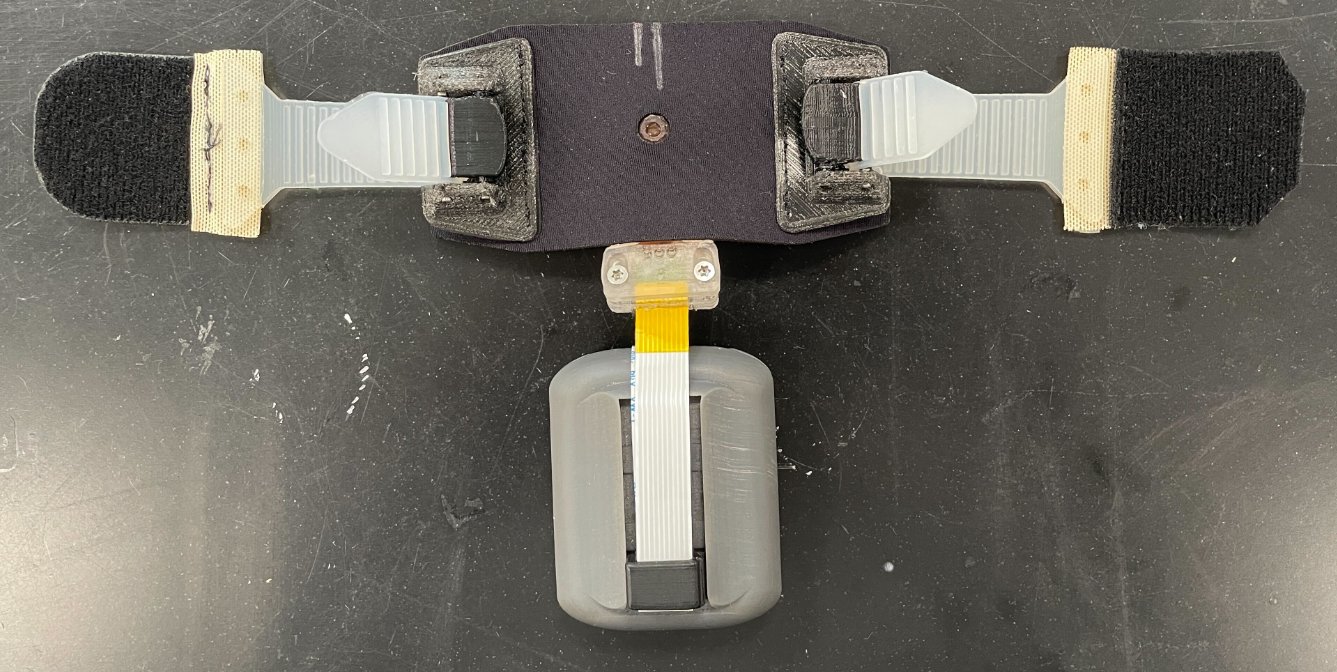
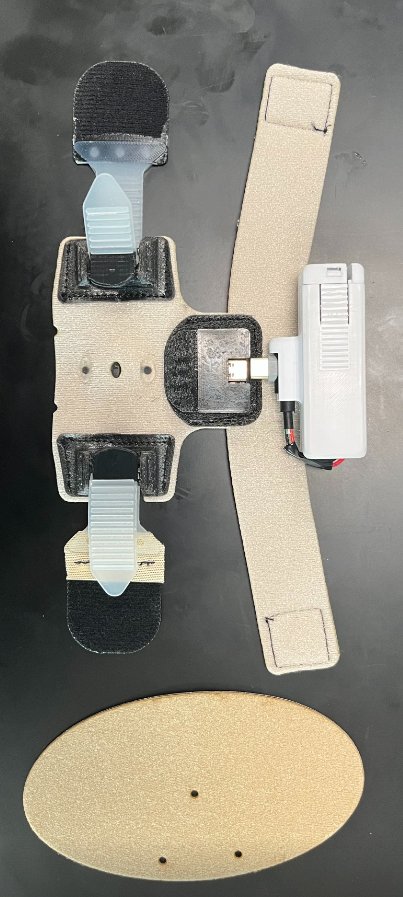
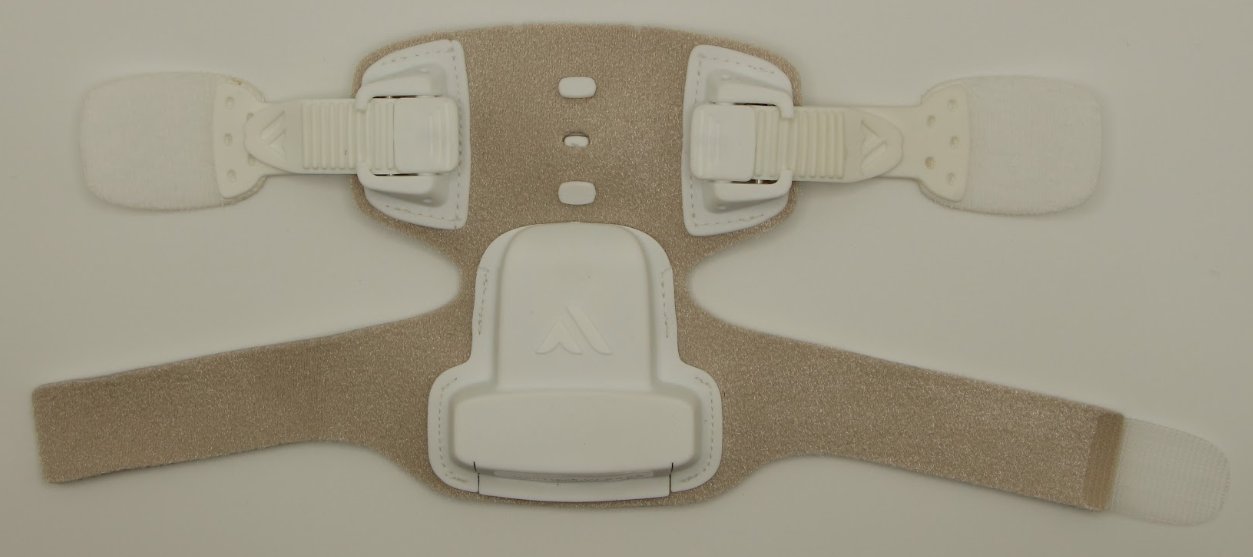
In a team of 3, drove our primary wearable device through 4 design iterations, from prototype to market viable product alongside our FDA 510(k) submission. Each iteration further improved signal acquisition, anatomical versatility, ease of setup, and patient safety. The final design integrates the wearable, sensor, and PCB/power unit into one platform ready for commercial launch.


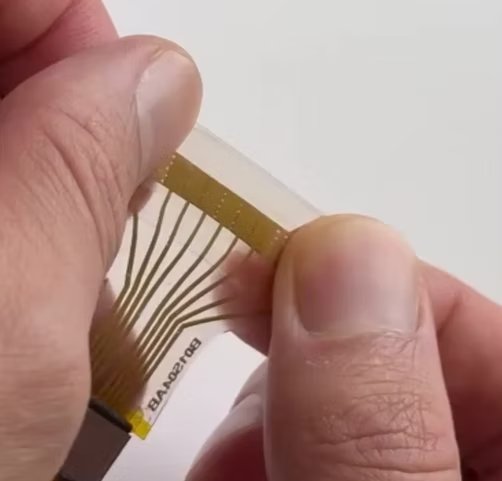
Refined the fabrication process for the custom flexible sensor at the core of Vena Vitals' blood pressure measurement system. By revising work instructions and in-process QC criteria, I raised fabrication yield while protecting signal performance. A statistical risk analysis of the final QC acceptance criteria, incorporating intended use and patient harm risk, led me to revise those criteria and raise yield, setting the quality foundation for commercial production. I also helped build the ISO 13485-compliant QMS for in-house sensor manufacturing, covering process validation (IQ/OQ/PQ), risk management (PFMEA, risk controls), manufacturing traceability, and device master records.
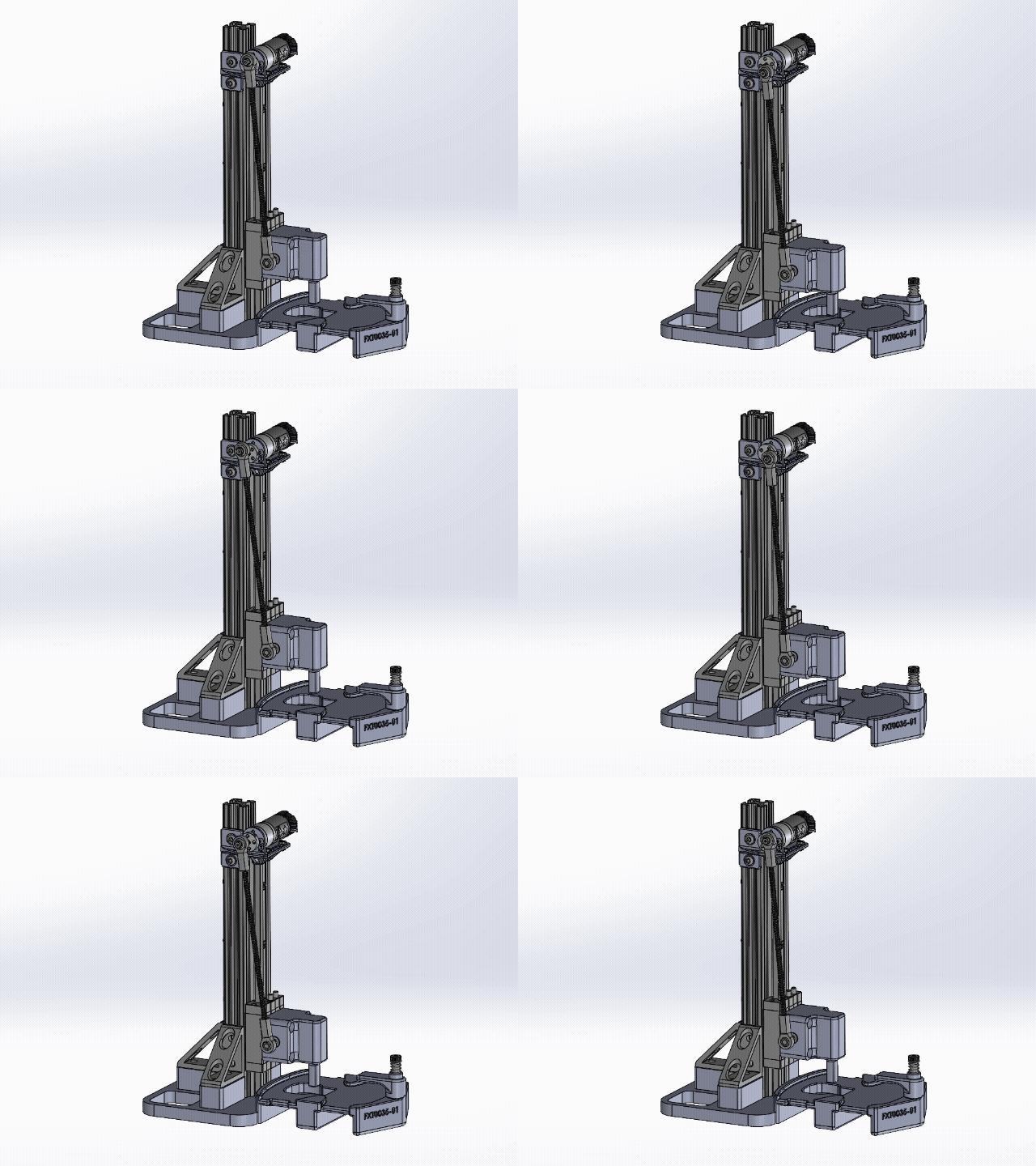
Created a sensor QC step that did not exist before. Traced the root cause of a defect that appears in the sensor's signal output, then found a way to reproduce it without damaging or degrading the sensor. Wrote the QC protocol and developed the fixture that runs it: a slider-crank mechanism driven by a DC motor compresses the sensor at a defined frequency and records the resulting signal, reproducing the defect in an automated, repeatable way. Designed the mechanical hardware in SolidWorks, created and tested the electrical assembly, and programmed the microcontroller controls. Also defined the requirements for the evaluation software, set the acceptance criteria, and led test method validation for the QC step and all associated equipment and software.
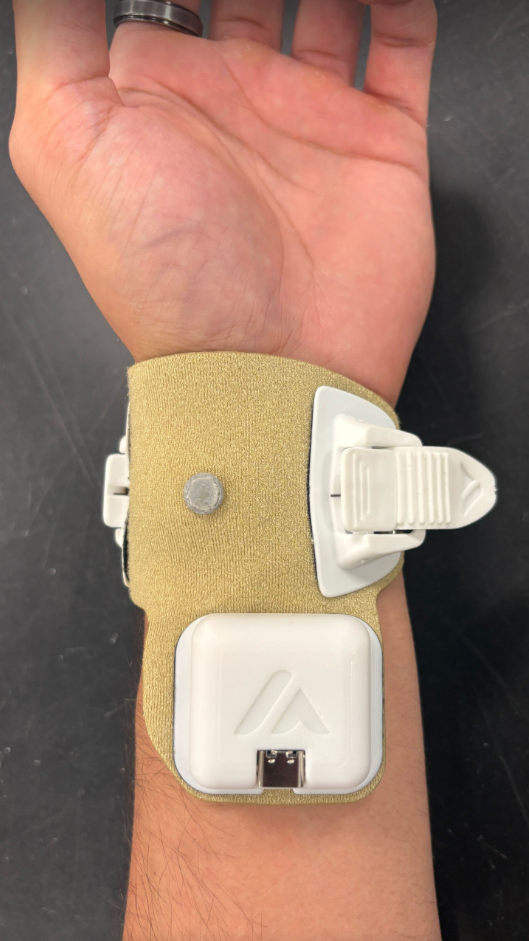
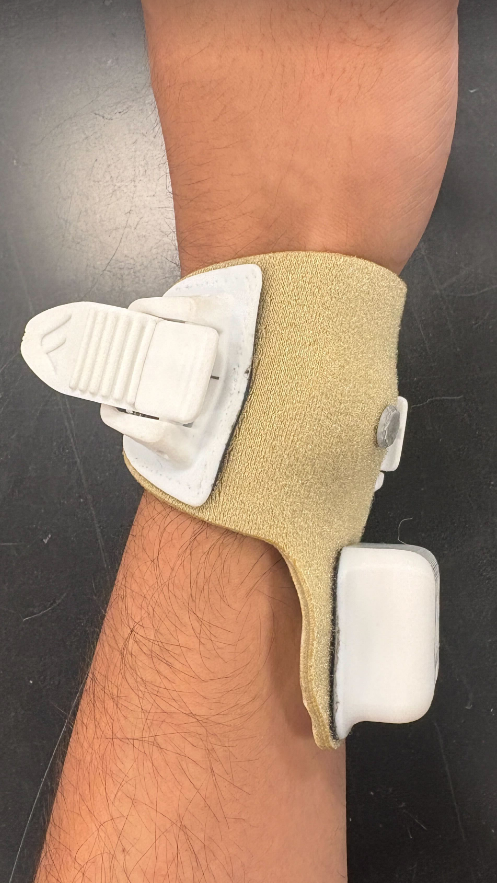
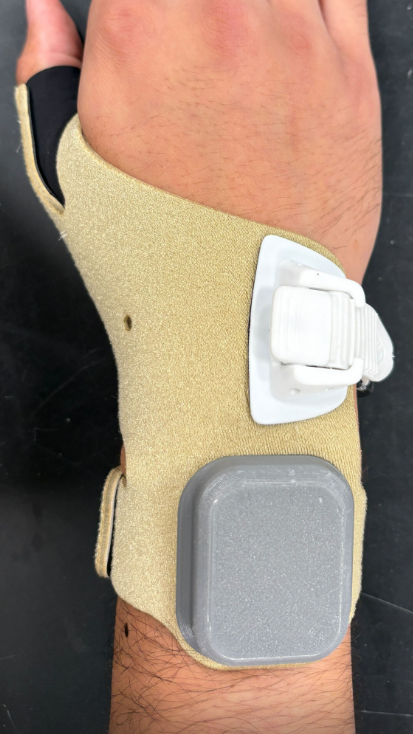
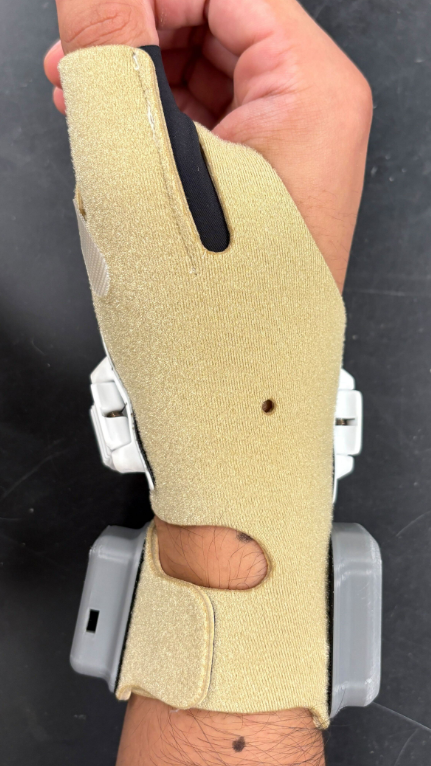
After the primary device reached a stable design, worked in a team of 3 to extend the platform into two working prototypes with new form factors. These were built primarily as proof of concept prototypes for investor presentations and industry conferences. Both were functional enough to collect real data, demonstrating that the sensor platform is adaptable to more than one part of the body. One moves the sensor to the wrist, the other to the hand, each with its own approach to functionality, comfort, and usability.
Open to R&D and hardware engineering roles at startups and growth-stage companies in medical devices, robotics, and wearables.